

What is a Specialized Pet Clothing Factory?
A specialized pet clothing factory is a manufacturing facility dedicated exclusively to the production of apparel for companion animals, distinct from general garment textile mills.
These factories possess specific expertise in pattern grading for quadrupeds (four-legged animals) and source pet-safe materials that meet strict chemical standards like REACH eller CA Prop 65.
Partnering directly with a specialized factory ensures better cost control, consistent sizing across breeds, and faster turnaround times compared to using general trading intermediaries.
Why is the “Pet Humanization” Trend Driving Apparel Demand?
The “Pet Humanization” trend is not just a buzzword. It is a fundamental market shift. Owners now view pets as family members. This change drives a massive demand for premium pet apparel.
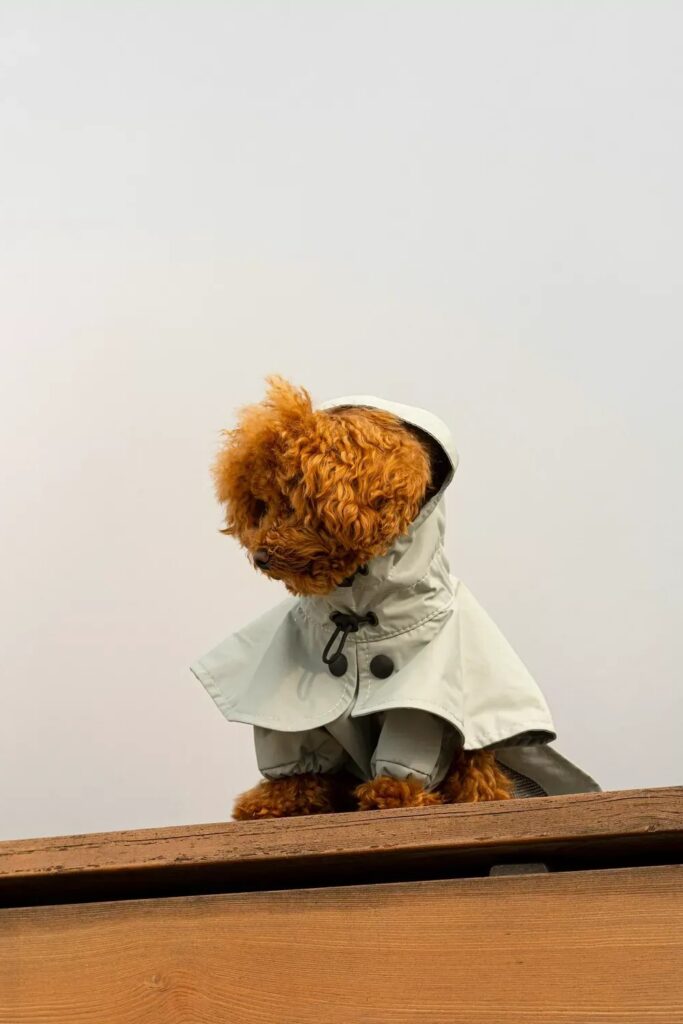
We see a surge in orders for functional gear, such as vattentäta regnrockar and thermal layers, rather than just decorative costumes. The market is hungry for high-quality products.
Why Retailers Struggle
Despite the high demand, sourcing is difficult. Many retailers face the same nightmare scenarios. You might receive a batch of sweaters where the size “Medium” varies by 3 centimeters between units. Perhaps the stitching unravels after a single wash because the factory used the wrong thread tension.
Even worse is the risk to your Intellectual Property (IP). You send a unique design to a general trader, and weeks later, you see a cheaper version sold by a competitor.
Case Study: The “Bulldog Fit” Challenge
A UK client came to us after receiving a batch of hoodies from a general factory that didn’t fit French Bulldogs—the chests were too tight, and the necks were too loose.
Our pattern team immediately adjusted the grading, creating a specialized “Broad-Chest Fit” pattern. Resultat: The client’s return rate dropped from 18% to under 2% for that SKU in the next season.
The Solution: Direct Factory Partnership
Success requires the right partner. You need to bypass general trading companies that simply mark up prices. Instead, partner directly with a specialized pet clothing factory.
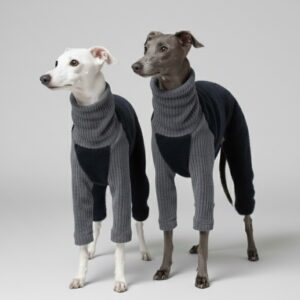
A dedicated factory understands that a French Bulldog’s chest fit differs completely from a Greyhound’s. We control the raw materials. We monitor the production line. We do not outsource your quality control to a third party.
| Funktion | General Trading Company (Middleman) | Specialized Pet Clothing Factory (Us) |
| Prissättning | Higher (Includes 15-30% markup) | Fabriksdirekt prissättning (No hidden fees) |
| Kommunikation | Indirect (Messages passed through layers) | Direct Access to production managers |
| Kvalitetskontroll | Often outsourced or random checks | In-House QC (4-Point System & Needle Detection) |
| Sizing Expertise | Uses standard human grading (poor fit) | Breed-Specific Grading (e.g., Bulldog vs. Greyhound) |
| IP Protection | High Risk (May sell your design to others) | Strict NDA & Exclusive Molds |
| Problemlösning | Slow (Blames the factory) | Immediate (We control the line) |
What This Guide Covers
This article is your roadmap. We will walk you through the entire procurement process. We cover how to launch your private label and how to select materials that pass safety tests.
Finally, we will explain how to navigate complex logistics and customs clearance to get your goods safely to your warehouse.
What defines a high-quality pet clothing factory?
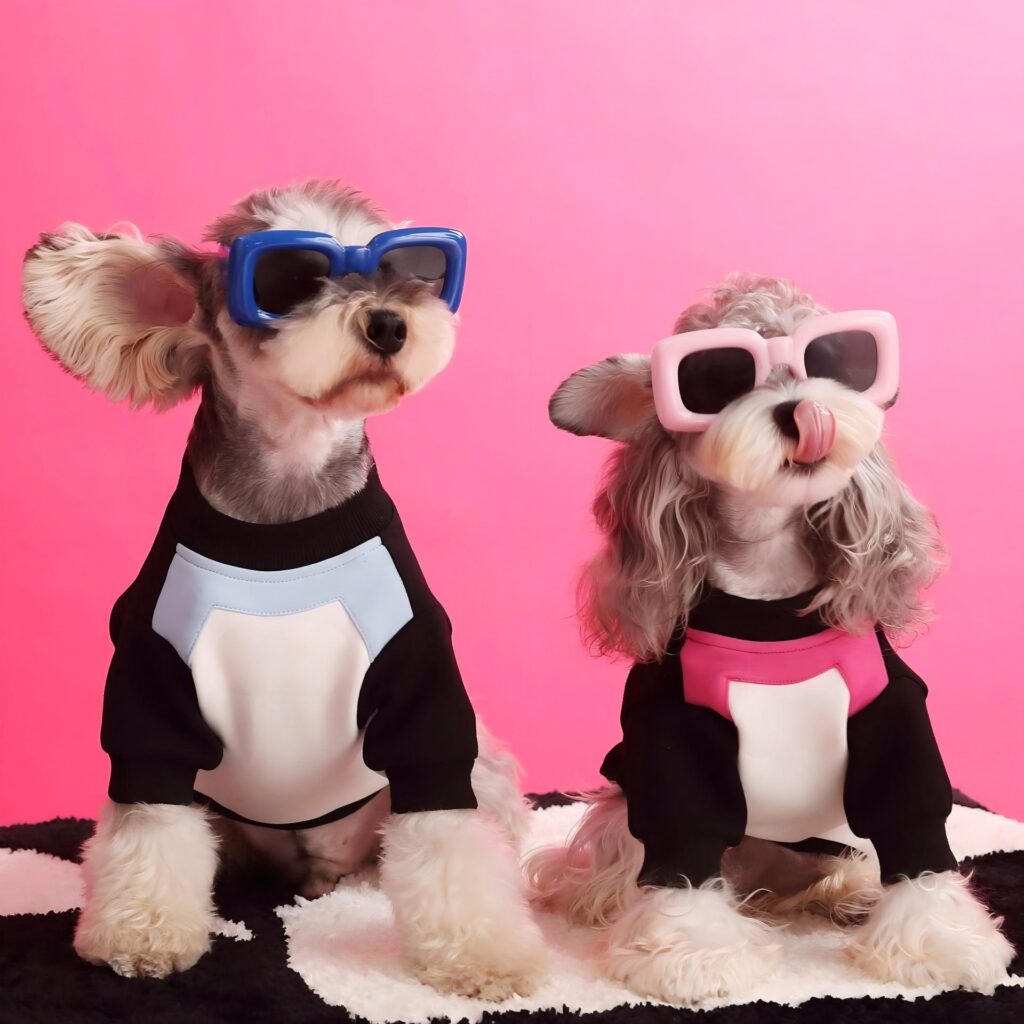
A high-quality pet clothing factory is defined by its adherence to international safety standards, the use of specialized machinery for non-human body shapes, and a rigorous Quality Control (QC) system. It must hold valid certifications like BSCI for social compliance and ISO 9001 for quality management.
Crucially, a top-tier factory implements strict needle detection protocols and chemical testing to ensure products are safe for pets who may chew on their apparel.
Which Safety Certifications Should You Look for in Pet Apparel?
We do not rely on verbal promises. We look for documented proof. A legitimate factory operates under specific frameworks:
- ISO 9001: This certifies the factory has a consistent management system. It ensures that the jacket you order in January matches the one you order in July.
- BSCI / SMETA: These audits verify ethical labor practices. Major retailers (like Walmart or PetSmart) require these reports before they will even look at your product.
- OEKO-TEX Standard 100: This is critical for fabrics. It guarantees the textiles are free from harmful substances like formaldehyde, which can irritate a pet’s sensitive skin.
What Machinery is Required for High-Quality Pet Clothing?
We ensure structural integrity by matching the right machinery to your product. Unlike general factories that might force a harness through a standard sewing machine, we utilize specialized Heavy-Duty Bar-Tack machines specifically for load-bearing gear:
- Computerized Pattern Cutters: These machines reduce fabric waste and ensure precise sizing for complex dog breeds.
- Heavy-Duty Bar-Tack Machines: We use these for harnesses and leash attachment points. They reinforce stress areas to withstand up to 200kg of pull force.
- 4-Thread Overlock Machines (Sergers): Essential for knitwear. This allows the seam to stretch with the dog’s movement without snapping the thread.
Rigorous Quality Control (QC)
We implement a multi-stage inspection process. Random checks are not enough.
- The 4-Point System: We inspect raw fabric before cutting. Defects like holes, stains, or shading are assigned points. If a roll exceeds 40 points per 100 square yards, we reject it immediately.
- Inline Inspection: Inspectors check the first output of the day (the “Gold Sample”) to calibrate the machines.
- Needle Detection: This is non-negotiable. Every single finished garment passes through a conveyor belt metal detector. This prevents broken needle fragments from injuring a pet.
Remote Verification Methods
You do not always need to fly to China to verify a supplier. We use modern tools to audit factories remotely:
- Live Video Walkthroughs: Do not settle for pre-recorded videos. Ask for a live WeChat or Zoom call. Ask the operator to show you the raw material warehouse and the needle detection logbook in real-time.
- Third-Party Inspections: Hire agencies like SGS, Intertek, eller Bureau Veritas. For roughly $300 USD, they send an inspector to the factory. They act as your eyes and verify the goods against your tech pack before you pay the final balance.
Buyer’s Tip: The “Fake Factory” Trap
The Scam: Many suppliers on Alibaba claim to be factories but are actually trading companies operating out of an office. They show you photos of a factory that belongs to someone else.
How We Avoid It: We ask for a photo of the factory’s Business License. We check the “Scope of Business” line. If it says “Production” or “Manufacturing”, it is likely a factory. If it only says “Wholesale” or “Sales”, they are a middleman.
We also ask them to write the current date and our company name on a piece of paper and take a photo of it next to a running sewing machine. A trader cannot do this.
Custom vs. Ready-Made: Which manufacturing model suits your business?
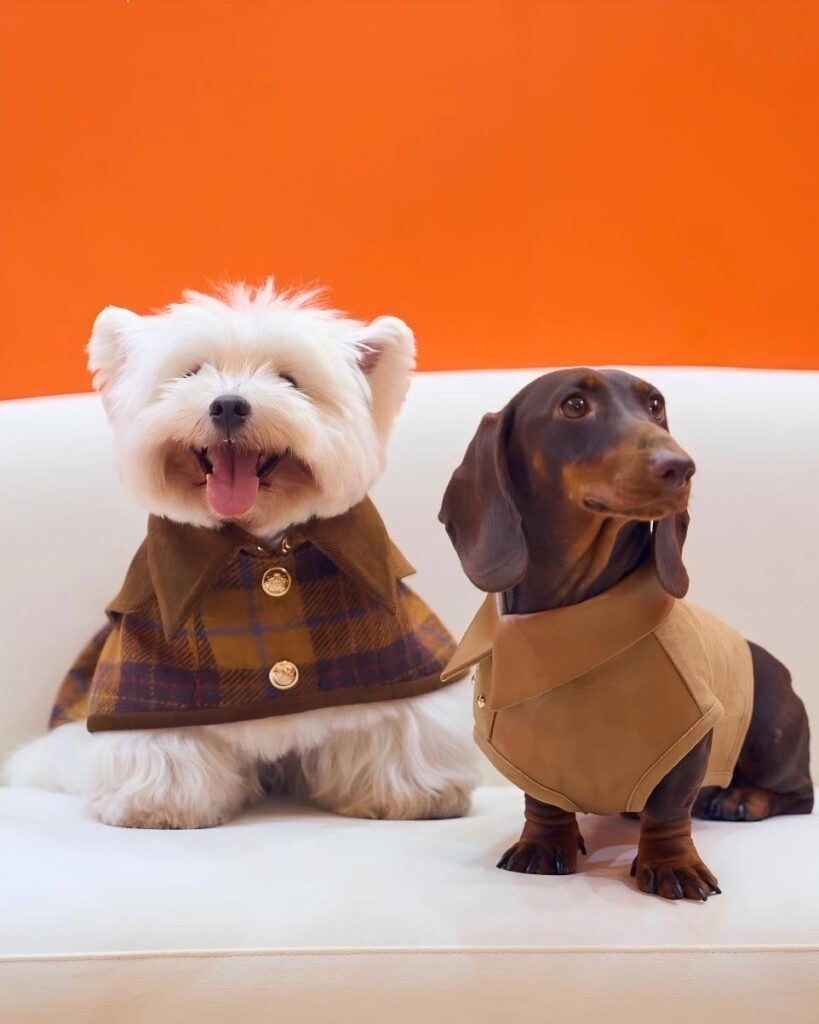
Choosing the right manufacturing model determines your startup costs, lead times, and brand uniqueness.
OEM (Original Equipment Manufacturer) involves creating a product from scratch based on your unique designs, offering full control but requiring higher Minimum Order Quantities (MOQs).
ODM (Original Design Manufacturer), or Private Label, involves selecting existing factory designs and adding your branding, allowing for faster market entry and lower initial investment.
| Comparison Point | OEM (Custom Manufacturing) | ODM (Private Label / Ready-Made) |
| Bäst för | The factory owns the design (Non-exclusive) | Startups, Fast Fashion, Testing Markets |
| Design Ownership | You own the IP (Exclusive) | Factory owns the design (Non-exclusive) |
| Ledtid | 3-6 Months (Development + Production) | 15-30 dagar (Fast Turnaround) |
| MOQ (Min Order) | High (500-1,000 pcs/color) | Låg (50-100 pcs/style) |
| Anpassning | Full (Fabric, Fit, Hardware, Trims) | Limited (Logo, Hangtag, Packaging only) |
| Setup Costs | Higher (Pattern fees, Mold fees) | Low/Zero (Existing patterns used) |
OEM (Custom Manufacturing)
This is the path for brands that want to lead the market, not follow it. You provide the Tech Pack, and we build the product from the ground up.
- Fördelar:
- Total Exclusivity: You own the design. No competitor will have the same raincoat or sweater.
- Fit Control: You can adjust the sizing chart to fit specific breeds (e.g., a “Broad Chest” fit for Bulldogs).
- Material Choice: You select every component, from the waterproof rating of the nylon to the type of buckle used.
- Nackdelar:
- High MOQ: Factories usually require 500-1,000 pieces per color to dye custom fabric.
- Longer Lead Time: Development takes 3-6 months, including sampling and revisions.
ODM (Private Label / Ready-Made)
This is the “speed-to-market” strategy. The factory already owns the patterns and molds. You simply choose a model from their catalog and stamp your logo on it.
- Fördelar:
- Low MOQ: You can often order as few as 50-100 pieces per style.
- Fast Turnaround: Production can finish in 15-30 days since the fabric is often in stock.
- Proven Fit: The factory has likely already tested the fit on real dogs, reducing return rates.
- Nackdelar:
- Zero Exclusivity: Your competitors might sell the same jacket, just with a different logo.
- Limited Customization: You cannot change the main fabric or the cut; you can usually only change the color or the patch.
The Hybrid Approach
Smart buyers often mix these strategies to balance risk.
- Core Collection (ODM): Use ready-made designs for basic items like plain hoodies or bandanas to keep cash flow moving.
- Signature Collection (OEM): Invest in custom manufacturing for your “Hero Products”—the unique items that define your brand image. This limits your financial exposure while still building brand equity.
Optimizing Your Investment: Transparent Mold & Pattern Pricing
Instead of asking you to simply ‘budget for costs,’ we help you amortize these investments. For example, while a custom zipper mold costs $150 upfront, we can credit this amount back to you once your cumulative orders reach 5,000 units. We view NRE (Non-Recurring Engineering) not as a fee, but as a shared investment in your brand’s uniqueness.
- Pattern Grading Fees: A factory charges $50-$100 to digitize a design and grade it into 5 sizes (XS to XL).
- Hardware Molds: If you want a zipper puller shaped like a bone with your logo, you must pay for a metal mold. This costs between $150 and $300.
- Screen Printing Screens: Each color in your logo requires a separate screen. A 3-color logo setup fee is around $40-$60.
Buyer’s Tip: The “Free Sample” Myth
The Misconception: New buyers often ask, “Can you send me a free sample so I can check the quality?”
The Reality: A professional factory will rarely send free custom samples. Making a single sample disrupts the production line. It requires a pattern maker, a cutter, and a sewer to stop their work.
Our Strategy: We always pay for samples (usually 3x the production price). However, we negotiate a “Refundable Sample Fee” clause.
If we place a bulk order exceeding 500 pieces, the factory deducts the sample cost from the final invoice. This shows that we are serious buyers, not just window shoppers.
How to choose the right fabrics for pet apparel?
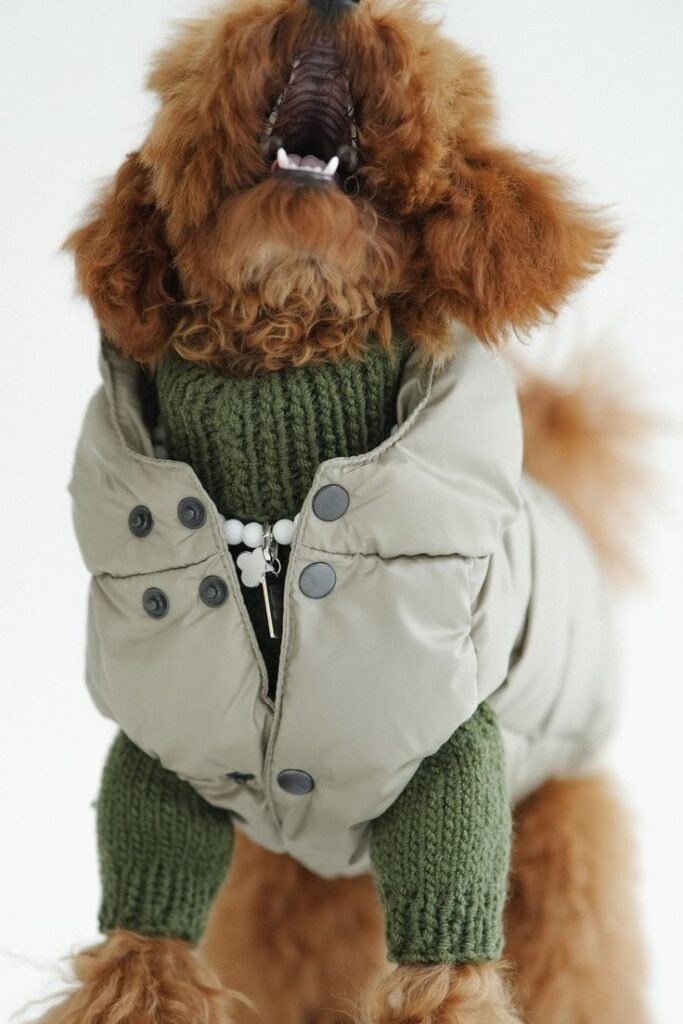
Choosing the right fabric is a balance between functionality (waterproofing, warmth) and Hållbarhet (resistance to claws and washing). Unlike human clothing, pet apparel faces unique stresses; fabrics must be abrasion-resistant and maintain their shape after frequent cleaning.
We prioritize materials backed by lab reports for färgbeständighet och krympning to minimize returns, while increasingly sourcing eco-friendly options like RPET to meet consumer demand.
Functionality vs. Fashion
We categorize fabrics based on the garment’s purpose. A cute look is useless if the dog is shivering or wet.
- Rainwear (The Outer Shell): We look for PU (Polyurethane) Coated Nylon or Polyester. We check the “Water Column” rating. A rating of 3,000mm is standard for light rain, but for serious outdoor gear, we specify 5,000mm+.
- Thermal Layers (The Insulation): We avoid cheap, loose fleece that pills easily. Instead, we select Polar Fleece (250-300 GSM). The higher the GSM (Grams per Square Meter), the denser and warmer the fabric.
- Andningsförmåga: For active dogs, we use fabrics with a TPU membrane. This allows sweat vapor to escape while keeping rain out, preventing the dog from overheating.
Durability: The “Claw Test”
Pets are rough on clothes. A delicate silk or loose knit will be destroyed in seconds.
- Abrasion Resistance: We prefer Ripstop Nylon. This fabric has a grid pattern of reinforced threads. If a dog’s claw punctures the fabric, the grid stops the tear from spreading.
- Stretch & Recovery: Vi lägger till 3-5% Spandex (Elastane) to cotton blends. This ensures the neck and armholes stretch when the dog runs, but snap back to their original shape afterwards.
Lab Testing Reports: Trust but Verify
We never assume a fabric is good; we demand the data. We ask the factory for these specific lab reports:
- Color Fastness (Grade 4): This measures if the dye bleeds. We require a Grade 4 (on a scale of 1-5) for “Rubbing” and “Washing.” If a red sweater turns a white dog pink, your brand is finished.
- Dimensional Stability (Shrinkage): We accept a maximum shrinkage of +/- 3% after three wash cycles. Cheap cotton can shrink 10%, making the garment unwearable.
- Pilling Resistance: We require a Grade 3.5 or higher. This ensures the fabric doesn’t look old and fuzzy after one week.
Miljövänliga alternativ
Sustainability is a major selling point. We source certified green materials:
- RPET (Recycled Polyester): Made from recycled plastic bottles. We verify this with a GRS (Global Recycled Standard) certificate. This tracks the plastic from the recycling center to the final fabric roll.
- Ekologisk bomull: Grown without toxic pesticides. We look for the GOTS (Global Organic Textile Standard) label. This is ideal for pets with skin allergies.
Buyer’s Tip: The “Coating Peeling” Issue
The Problem: You buy waterproof raincoats. After six months in the warehouse, the waterproof coating starts peeling off like dead skin. This is caused by “Hydrolysis”—moisture in the air breaking down cheap chemical bonds.
How We Avoid It: We specify “Anti-Hydrolysis PU Coating” valid for at least 2 years. We also ask the factory to perform a “Jungle Test” (accelerated aging test). They put the fabric in a hot, humid chamber for weeks to simulate years of storage. If it doesn’t peel there, it won’t peel in your customer’s closet.
Case Study: Saving a $50,000 Production Run
A new client wanted to use a trendy, low-cost holographic fabric for raincoats. During our pre-production “Jungle Test” (accelerated aging), the fabric began to peel after just 48 hours of humidity exposure.
We flagged this immediately and sourced a visually identical but chemically stable alternative. Resultat: We prevented a potential mass recall that could have destroyed the client’s brand reputation.
Can a pet clothing factory handle small MOQ orders?
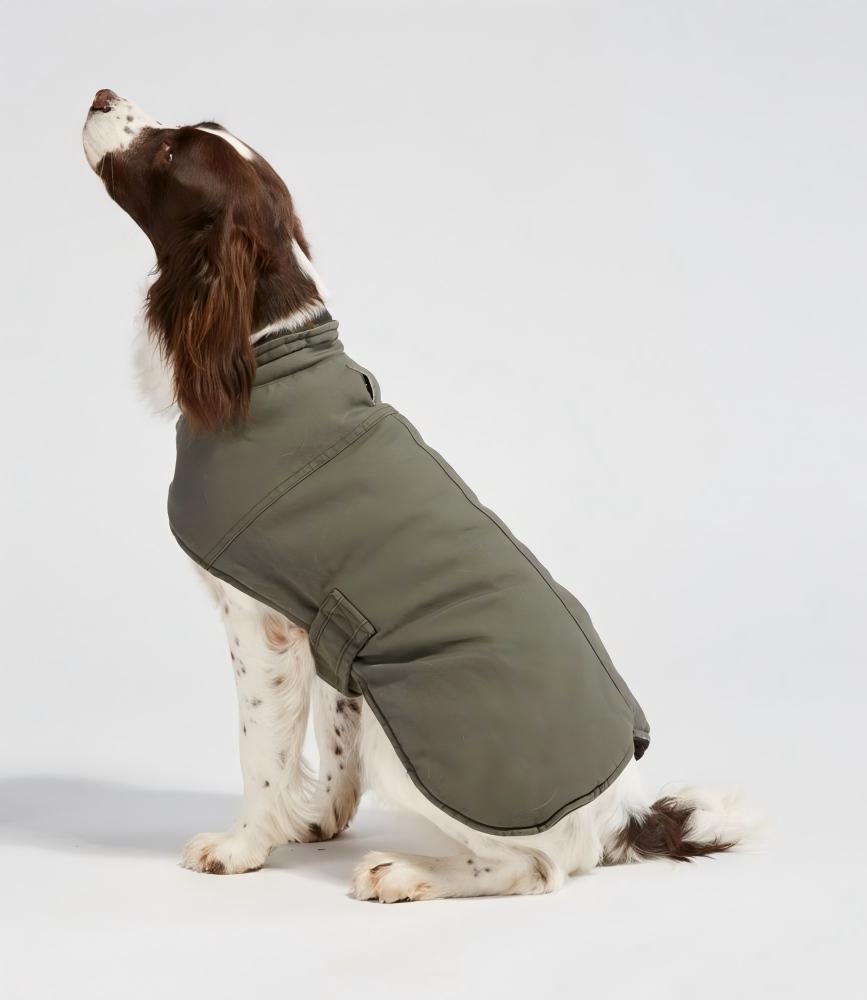
Yes, many factories can handle small orders, but you must understand the economics behind it. Minimum Order Quantities (MOQs) exist because factories operate on efficiency; setting up a production line for 50 items takes nearly as much time as for 500.
To navigate this, startups can use strategies like consolidating sizes or selecting stock fabrics to lower thresholds. Additionally, buyers should expect tiered pricing, where unit costs drop significantly as volume increases, and always invest in a pre-production sample to ensure quality before the bulk run.
Understanding the “Why” Behind MOQs
Factories are not trying to be difficult. They have fixed costs.
- Fabric Rolls: Textile mills sell fabric in rolls of roughly 100 meters. If your order only uses 20 meters, the factory is stuck with 80 meters of “dead stock.”
- Machine Setup: Calibrating 20 sewing machines for a specific stitch takes hours. If the workers only sew for two hours before switching styles, the factory loses money.
- Dyeing Lots: Dyeing a custom color requires a minimum vat size. Running a giant vat for a small amount of cloth is wasteful and expensive.
Strategies for Startups to Lower MOQs
If you cannot order 1,000 pieces, use these tactics to negotiate:
- Use Stock Fabric: Ask the factory for their “Available Stock Swatch Card.” If you choose a fabric they already have in the warehouse, they might lower the MOQ to 100 pieces per style.
- Consolidate Sizes: Instead of ordering 5 sizes (XS, S, M, L, XL) with 20 pieces each, order just 3 sizes (S, M, L) with 35 pieces each. This makes cutting and sewing faster.
- Offer a Surcharge: Be honest. Say, “I know 100 pieces is below your limit. I am willing to pay a $2.00/piece surcharge for this trial order.” Most factories will accept this to build a relationship.
Case Study: From 200 to 20,000 Units
A startup brand from California loved our designs but couldn’t meet the 1,000 MOQ for custom-dyed fabric. We suggested using our “Stock Greige” fabric and dyeing a micro-batch of 200 units with a small surcharge.
Resultat: This allowed them to test the market with minimal risk. Two years later, they are now one of our top partners, ordering 20,000 units per quarter.
Tiered Pricing Strategy
Price is not fixed. It depends on volume. You should plan your budget based on these tiers:
- Sample Price: 3x the bulk price (e.g., $30 per jacket).
- Trial Order (100-300 pcs): High unit price (e.g., $12 per jacket).
- Standard Order (500-1,000 pcs): Standard price (e.g., $9 per jacket).
- Volume Order (3,000+ pcs): Optimized price (e.g., $7.50 per jacket).
- Note: Always ask for a quote that shows these tiers. It helps you calculate your future profit margins.
The Pre-Production (PP) Sample
This is the most important item you will ever buy.
- What is it? A sample made with the actual bulk fabric and actual accessories, sewn on the actual production line.
- Why do you need it? The initial prototype might be handmade by a master tailor. The PP sample is made by the line workers. It represents what your customers will actually receive.
- The Golden Rule: Never authorize the bulk deposit payment until you have approved the PP sample in writing.
Buyer’s Tip: The “Greige” Fabric Trick
The Insider Secret: Some factories keep “Greige” (undyed, raw) fabric in stock. This allows for flexibility.
How It Helps You: If a factory has Greige fabric, it can dye smaller batches for you. You might not need to buy a full 3,000-meter run. You can ask them to dye just 300 meters for your order.
The color might vary slightly more than a massive batch, but it allows you to get custom colors with a lower MOQ. Always ask: “Do you hold any Greige stock for this material?”
Why is sourcing directly from China beneficial for B2B buyers?
Sourcing directly from China offers B2B buyers unmatched supply chain integration, providing immediate access to a vast ecosystem of raw materials like zippers, trims, and technical fabrics.
This proximity allows for the best global price-to-quality ratio, as factories can rapidly prototype and produce at scale without waiting for imported components.
Furthermore, established Chinese manufacturers are experts in logistics and Incoterms, often assisting with complex customs clearance, while increasingly employing English-speaking sales teams to bridge the communication gap.
Supply Chain Integration
China is not just a place to sew clothes; it is where the materials are made. This is a massive advantage.
- The “1-Hour Circle”: In manufacturing hubs like Zhejiang or Guangdong, a clothing factory is often within a one-hour drive of a zipper factory, a button molder, and a fabric dyer.
- Rapid Prototyping: If we need a specific shade of neon green nylon, a Chinese factory can source it locally in 2 days. A factory in Vietnam or Cambodia might have to import that same fabric from China, adding 2 weeks to the lead time.
Kostnadseffektivitet
It is not just about being “cheap.” It is about value.
- Efficiency: Chinese factories have highly skilled labor and automated systems. They produce more units per hour with fewer errors than emerging markets.
- Scalability: The same factory can often handle a trial order of 300 pieces and a scale-up order of 30,000 pieces. You do not need to switch suppliers as you grow.
Simplifying Global Logistics: We Handle the Complex Terms
Global shipping can be complex, but you don’t need to be a logistics expert—that’s our job. Whether you prefer FOB or a hassle-free DDP (Delivered Duty Paid) service directly to your warehouse, our team calculates the most cost-effective route for you. We manage the HS Codes and customs paperwork so you can focus on marketing, not clearing goods.
- FOB (Free On Board): The factory pays to get the goods to the Chinese port (e.g., Shanghai). You pay for the ocean freight and insurance. This gives you control over the shipping carrier.
- DDP (Delivered Duty Paid): The “hassle-free” option. The factory handles everything—shipping, customs, duties—and delivers the boxes to your door. This is great for beginners, though slightly more expensive.
- Customs Assistance: Experienced factories know the correct HS Codes (Harmonized System Codes) for pet apparel. Using the wrong code can lead to higher taxes or customs delays.
Communication Efficiency
The stereotype of the “language barrier” is fading.
- Professional Sales Teams: Top-tier factories hire university graduates with English degrees. They understand Western business culture. They know that “ASAP” means “now,” not “next week.”
- Problem Solvers: A good sales rep acts as your project manager. If there is a delay, they tell you proactively and offer a solution (e.g., “We will air freight 10% of the order at our cost so you don’t miss your launch”).
Buyer’s Tip: The “Hidden Weight” of Logistics
The Trap: You calculate your profit margin based on the product cost, but forget “Volumetric Weight.” Pet beds and puffy winter jackets are light but bulky. Shipping carriers charge you for the space they take up, not just their weight.
How We Avoid It: We insist on Vacuum Packaging. We ask the factory to compress puffy items into flat, airtight bags. This can reduce the carton volume by 50%, saving thousands of dollars in ocean freight. We always ask for the “Packing List” (Carton dimensions and weight) before we book the ship, so there are no surprises.
Real-World Savings:
For a recent shipment of 3,000 puffy winter jackets to Hamburg, our vacuum compression method reduced the total volume from 28 CBM (Cubic Meters) to 14 CBM. At current ocean freight rates, this saved the client approximately $2,500 in shipping costs instantly.
Conclusion: Your Manufacturer is Your Business Partner
Building a successful pet apparel brand requires more than just a transaction; it demands a strategic partnership. A general vendor simply executes an order and moves on.
A true manufacturing partner anticipates challenges, offers solutions for complex fabrics, and safeguards your brand’s reputation as if it were their own.
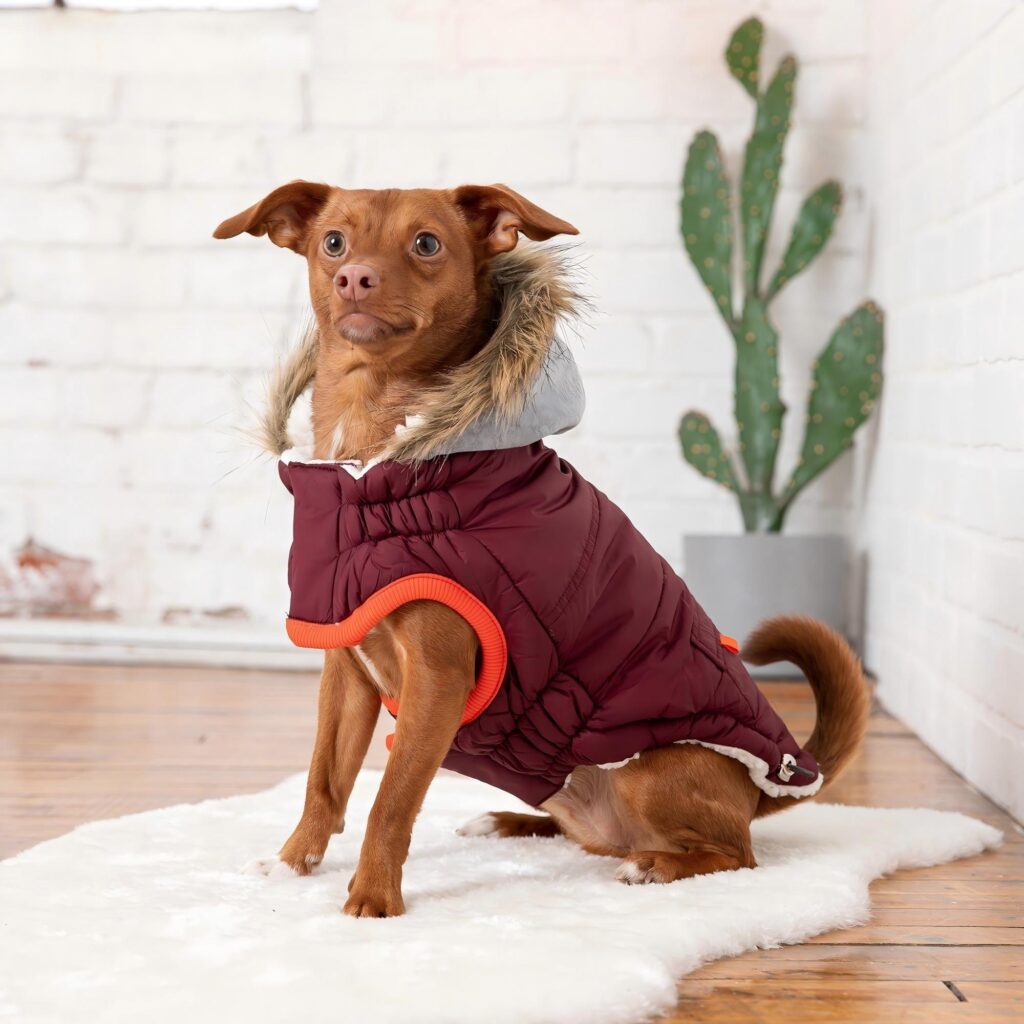
Throughout this guide, we have outlined the non-negotiables of the industry: consistent sizing that fits real dogs, materials that create safe and funktionella kläder för husdjur, and strict Intellectual Property protocols that keep your designs yours.
We combine this technical expertise with seamless logistics, ensuring that your journey from a digital Tech Pack to a physical product on a retail shelf is as efficient as possible. By choosing a specialized factory, you are not just buying inventory; you are securing a competitive advantage in the exploding pet humanization market.
Ready to Scale?
Do not leave your supply chain to chance. Whether you are launching your first collection or looking to upgrade your current production quality, we are ready to support your vision.
Contact us today for a detailed quote or schedule a live virtual factory tour to see our production lines in action. Let’s build your next bestseller together.

 English
  Turkish
  German
  Dutch
Dutch  French
  Greek
Greek  Danish
  Finnish
  Swedish
  Italian
  Polish
  Portuguese
  Russian
  Spanish